By: Allison Basco
As corporate social responsibility (CSR) and nonprofit-corporate partnerships have become an important measure of a company’s success, a nonprofit’s ability to demonstrate a partnership’s real-world impacts has become increasingly valuable. The most important measure of partnership success cited by CSR professionals is impact towards the nonprofit’s mission (95% of respondents) (For Momentum, 2025, The Partnership Shift: Evolving Trends in Corporate and Nonprofit Collaborations).
Vague metrics like brand lift or constituents reached no longer measure up in an impact-driven cause landscape. Corporate partners (and consumers) want to understand how their investment makes a tangible impact.
The Importance of Impact Metrics
Impact reporting integrates quantitative and qualitative data to achieve several aims:
- establish mission urgency
- demonstrate efficacy,
- foster trust among current and potential funders
- guide strategic planning
All of which serve to demonstrate a clear ROI. Impact metrics are particularly important in corporate-nonprofit partnerships as consumer, shareholder, and employee stakeholders increasingly expect companies to show, not just tell, their positive impact on society and the environment.
What Successful Impact Metrics Do
- Focus on the outcomes of a program or partnership, instead of outputs
- Tell a compelling story that illustrates the real-life benefits of a program or partnership
Outcomes vs. Outputs
Outputs are metrics that describe a program or partnership’s services or deliverables like trainings provided, items donated, or beneficiaries served. Outcomes go further to describe the value that those outputs provided individuals or communities and why that added value matters. Focusing on outcomes allows you to demonstrate the greater impact of your organization’s work and therefore, the impact of investing in that work.
Effective Storytelling
While metrics are a series of numbers and percentages, when used thoughtfully, they can tell a story. To identify the story you want to tell, start by asking a few foundational questions. Where would an individual or community be without this support? What can that person or community of people accomplish as a result of that program? How can the outcomes of an individual or community experience create a ripple of change?
Best-in-Class Example
Big Brothers Big Sisters of America (BBBSA)
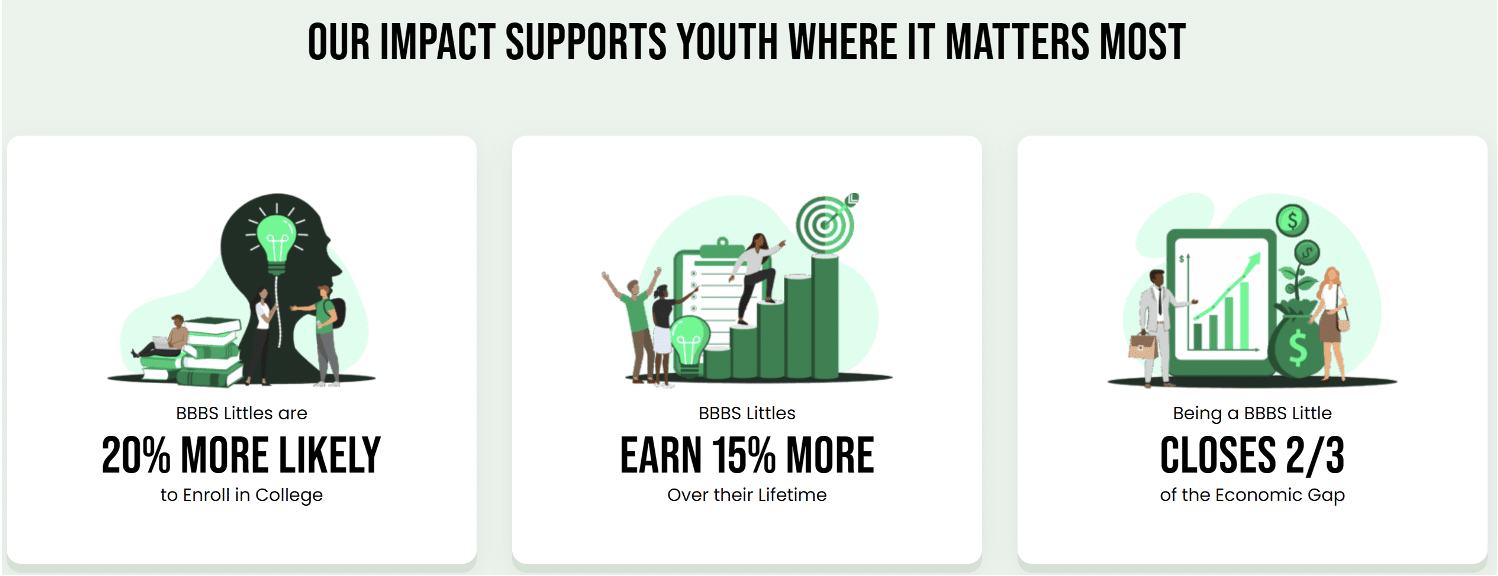
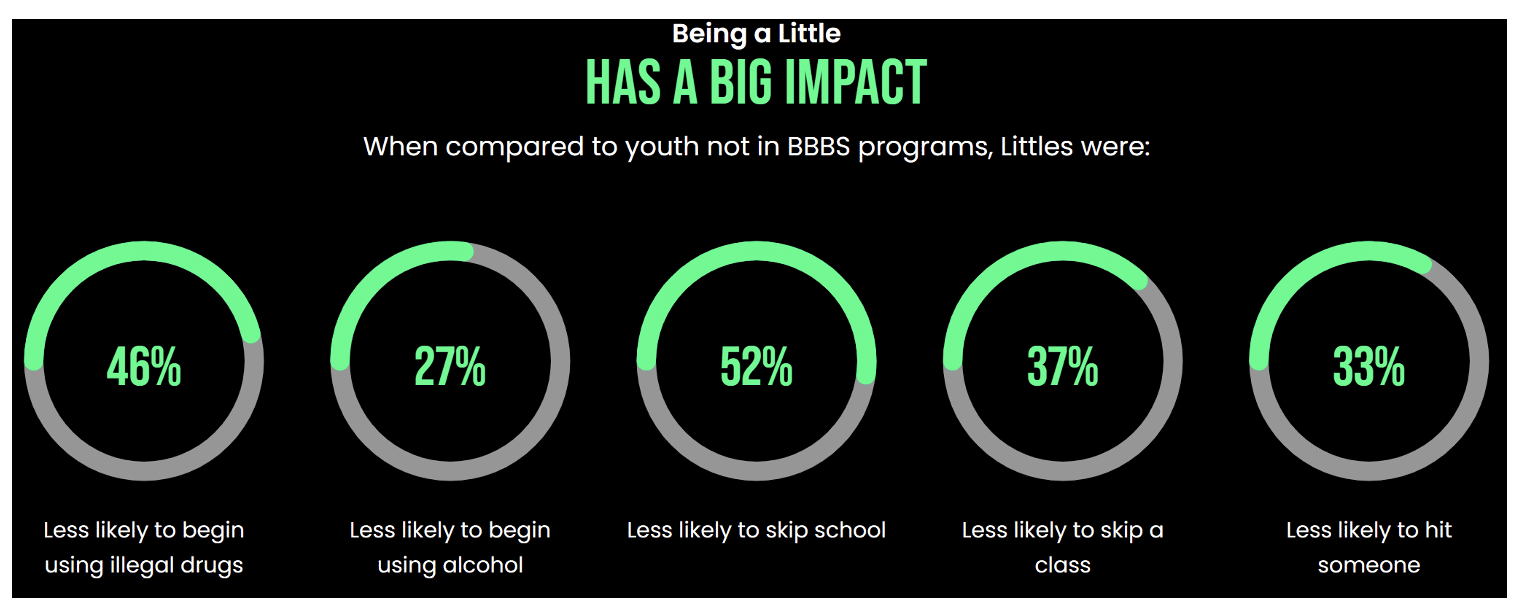
BBBSA’s mission is to create and support one-to-one mentoring relationships that ignite the power and promise of youth. The organization excels at using data to:
- Demonstrate the behavioral outcomes of BBBS mentorships, such as decreased likelihood of using drugs and skipping school
- Share how those outcomes lead to individual successes and societal benefits like higher future earnings and closing the economic gap

Leave a Reply