
By: Ashley Byars
Impact reporting is an integral part of cause partnerships. However, capturing and collecting data can be cumbersome for nonprofit organizations that are squeezed for resources. Enter tech that can help bridge the gaps and make communicating your impact to corporate partners easier.
Several technologies can be helpful for social impact reporting, allowing organizations to streamline data collection, measure results and improve transparency.
Let’s get into why data is important in partnerships, the most popular data collected and the technology available to help.
Importance of Data Collection
From our Next Level Partnerships report, we know that CSR leaders at top companies rank making an impact on the nonprofit’s mission their No. 1 success factor in their partnerships. Companies want to see how their funds, volunteerism and support make a direct difference in the community their organization supports.
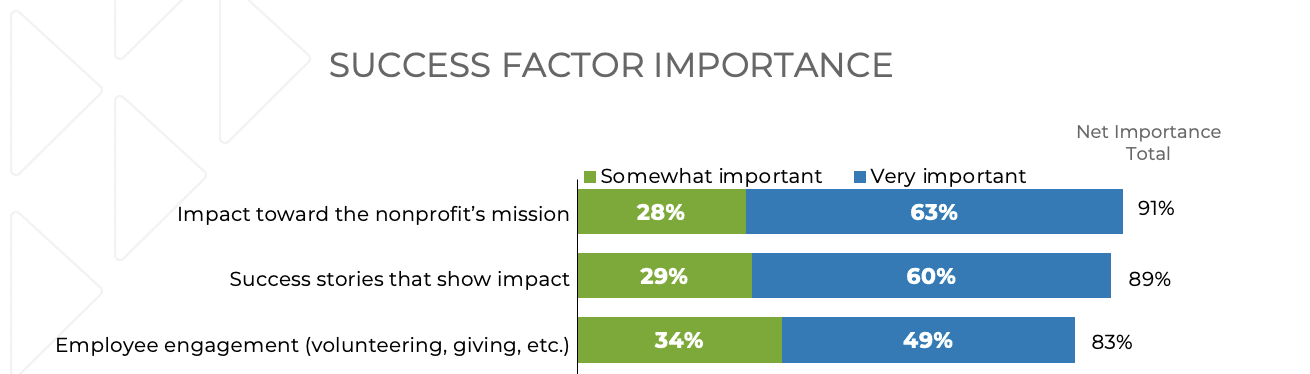
Not only do they want to see the quantitative data, but they also want to hear the qualitative stories of impact underneath the data. Capturing qualitative and quantitative data is vital to satisfying corporate partners and helping them spread awareness of the partnership impact.
Top Key Performance Metrics Nonprofits Report to Corporate Partners
Companies want data and stories. Got it. But what kind of data? Below are the most common key performance metrics that help tell the story of impact to partners. Of course, each nonprofit is unique and should add tailored metrics that tell their specific story.
Number of people served: reach of the nonprofit’s programs and services.
Percentage of program participants achieving specific outcomes: effectiveness of the nonprofit’s programs in achieving its goals. For example, a nonprofit providing job training might track the percentage of participants placed in jobs after completing the program.
Cost-effectiveness metrics (cost per beneficiary served): how efficiently the nonprofit is using its resources to achieve its mission. Corporate partners often look for nonprofits that can deliver strong social impact while remaining financially responsible.
Volunteer engagement (hours volunteered): level of community support for the nonprofit’s cause and the added value beyond financial contributions.
In-kind donations received (value): goods or services donated by a company instead of cash. Tracking these donations’ value helps show the partnership’s total impact.
Digital engagement and awareness reach): how many followers engaged (either through donating or clicks) and amplification through reshared content.
Technologies Easing Impact Reporting
Once you’ve determined your key metrics, there are several ways to track your impact data. Spreadsheets are simplest solutions that most organizations are familiar with like Excel, Google Sheets and Smartsheet. These allow users to track their metrics quickly and easily but require significant manual input from staff and have limited data analytics capabilities.
As organizations grow, a more robust dashboard solution is often needed. Check out a few dashboard solutions our clients have found game-changing for impact data.
Dashboard Tools Easing Impact Data Management
Dashboard tools can often be integrated with your current CRM, connecting your current data so you’re not starting from scratch while giving you new capabilities like dynamic visualization of large complex data sets that can be shared across teams and stakeholders, a game-changer in reporting.
- Tableau from Salesforce, integrating with Salesforce CRM
- Power BI from Microsoft, integrating with Microsoft Dynamics CRM
- Data Studio from Google, integrating with CRMs compatible with Google Workspace, including Monday, Streak and ClickUp
Purpose-Built Tools for Impact Management and Reporting
These platforms centralize data collection and management for social and environmental initiatives. Features include tracking of activities and beneficiaries and progress toward goals.
- Mythos: allows teams to create personalized reports and dynamic microsites tailored to each partner’s specific interests. Users can create video messages, add financial data and tell beneficiary stories all in one place. The software also includes content collection with Smart Surveys, content management with the Story Manager and the ability to gain specific insights on audience engagement to identify opportunities for improvement.
- SoPact: enables nonprofits to collect, transform and get insights from quantitative and qualitative stakeholder data. SoPact’s Impact Cloud is a fully automated platform that allows you to run all program evaluation activities without the hassle of hundreds of hours, advanced data analyst skills or costly tools.
- ImpactMapper: helps nonprofits track their impact and sustainability. This platform is unique in that it allows for the analysis and visualization of text, financial and survey data in one view.
Impact reporting can be challenging for nonprofit teams already stretched thin on capacity and resources. Taking a look at new tech tools can help ease the collection and reporting process and deliver better reports for sustainable partnerships.
