
By: Mollye Rhea
Want more planning tips? Join us for an October 8 webinar with Verizon and United Way Worldwide!
As pressures on nonprofit fundraising mount, attracting and retaining the right corporate partners is crucial for a successful 2026. Now is the perfect time to start developing a strategic partnership plan with your team that focuses on mission alignment and shared purpose.
The landscape of corporate philanthropy is changing. Today, consumers and employees expect companies to play a leading role in addressing social issues. One of the most effective ways for a company to do this is by partnering with a nonprofit. But what exactly do corporate decision-makers look for in these partnerships?
According to a recent survey by For Momentum, corporate decision-makers are becoming more strategic. They’re looking for nonprofit partners who not only align with their social purpose, but also help them meet their business goals. Take a look at our top three tips to help you prepare for a successful 2026.
Tip 1: Focus on What Matters Most to Partners
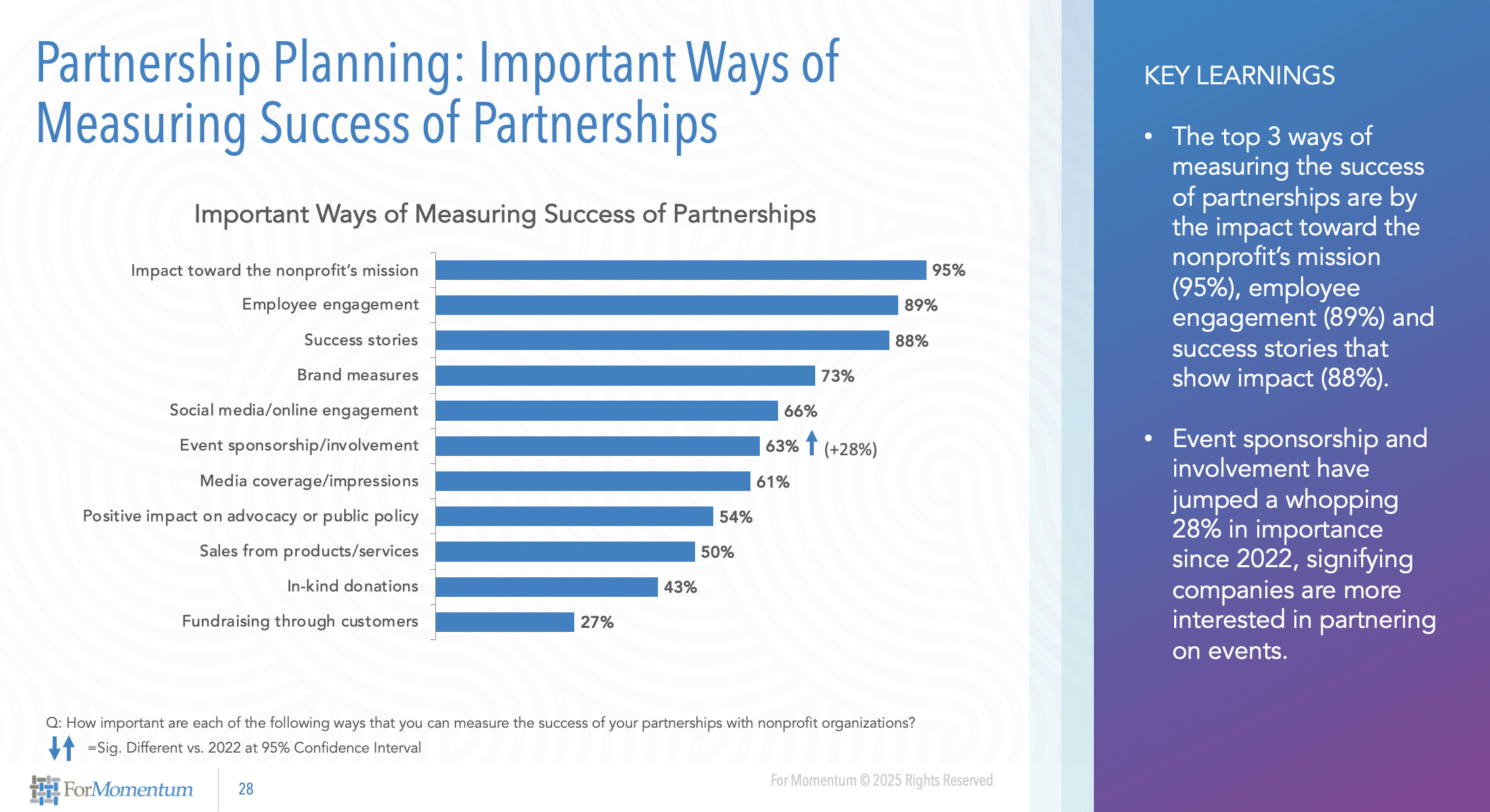
Your partners want to see impact. When For Momentum asked corporate decision-makers what they look for in a nonprofit partner, a few key themes emerged. In fact, nine out of 10 respondents ranked the following as the most important factors in selecting a nonprofit partner:
- Impact toward the nonprofit’s mission: Companies want to know that their investment is making a tangible difference.
- Employee engagement opportunities: Providing meaningful ways for employees to get involved is a big priority.
- Success stories to show impact: Partners need compelling stories they can share with their customers, employees and stakeholders to demonstrate the value of the partnership.
As you plan, think about how you can clearly communicate these elements. Can you provide a report detailing the direct impact of partnering with your nonprofit? Do you have a list of engaging volunteer activities and giving opportunities for their employees?
Tip 2: Align Your Mission and Brand
A strong partnership is a two-way street. Companies are looking for partnerships that not only showcase their social responsibility, but also provide brand visibility and help them stand out in the marketplace.
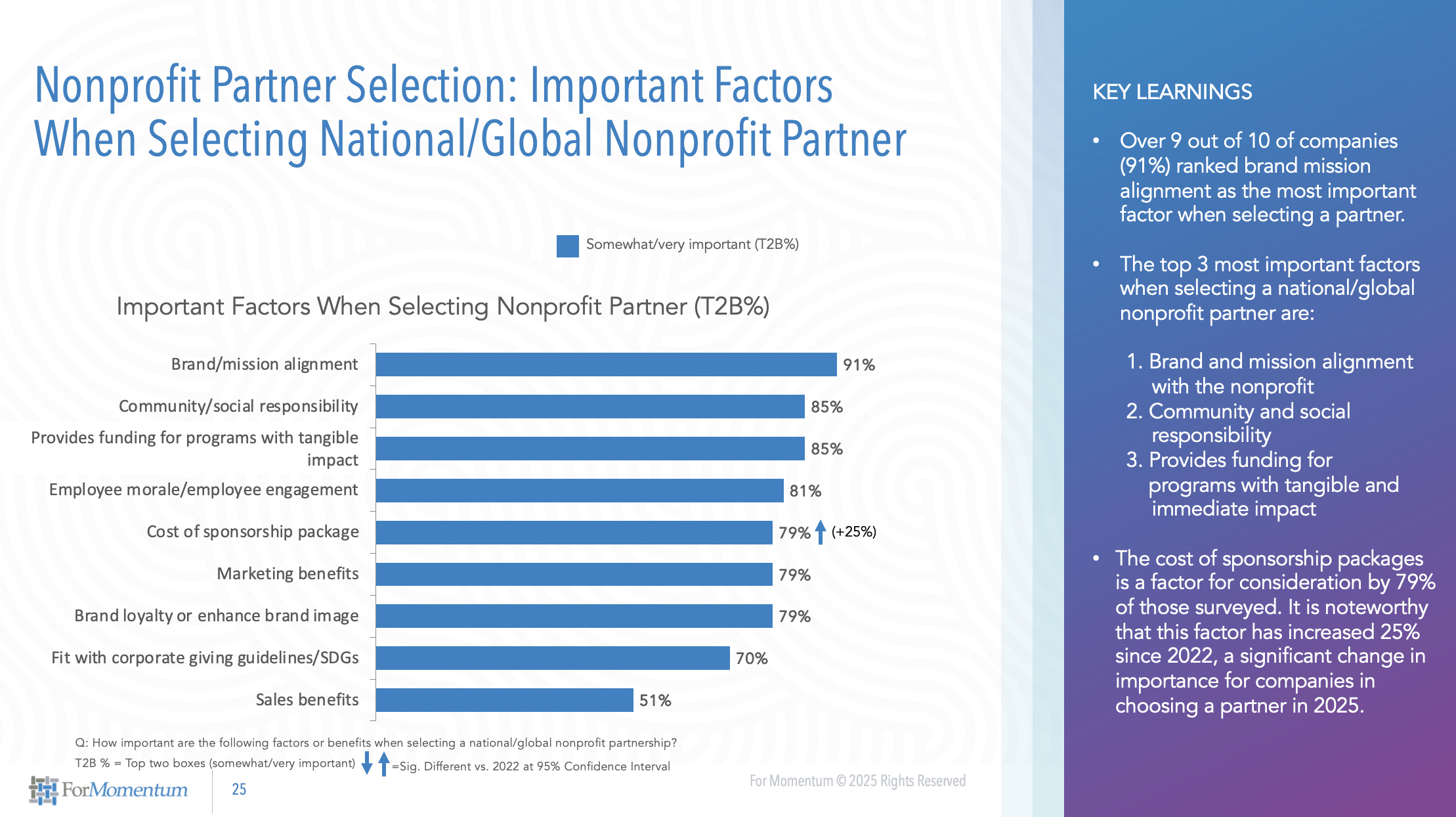
One of the most significant shifts we’ve seen is the increased importance of brand and mission alignment. Our 2025 survey found a huge jump in how much companies value being able to show real community support and social responsibility. It’s a dramatic change from a decade ago, highlighting how critical it is to demonstrate how a partnership with your nonprofit can help a company achieve its brand and business goals.
Our survey respondents ranked brand/mission alignment the No. 1 factor in selecting a nonprofit partner. There was a tie for No. 2 between “provides funding for programs with tangible impact” and “showcasing community support/social responsibility,” with 85% of respondents selecting each. In our 2015 survey, it was ranked #, with only 8% of respondents selecting it as an important factor in selecting a nonprofit partner. Ensuring that your partnership will have an impact within the communities a corporate partner supports is now paramount.
When you’re prospecting or renewing a partnership, consider how you can offer a comprehensive, 360-degree approach. This includes integrating the marketing of the partnership at the national and local levels:
- Local media outlets and signage
- Digital and social media campaigns
- Employee communications
- Events (both volunteer and fundraising activations)
- Paid and organic media opportunities
Tip 3: Prioritize Stewardship and Innovation
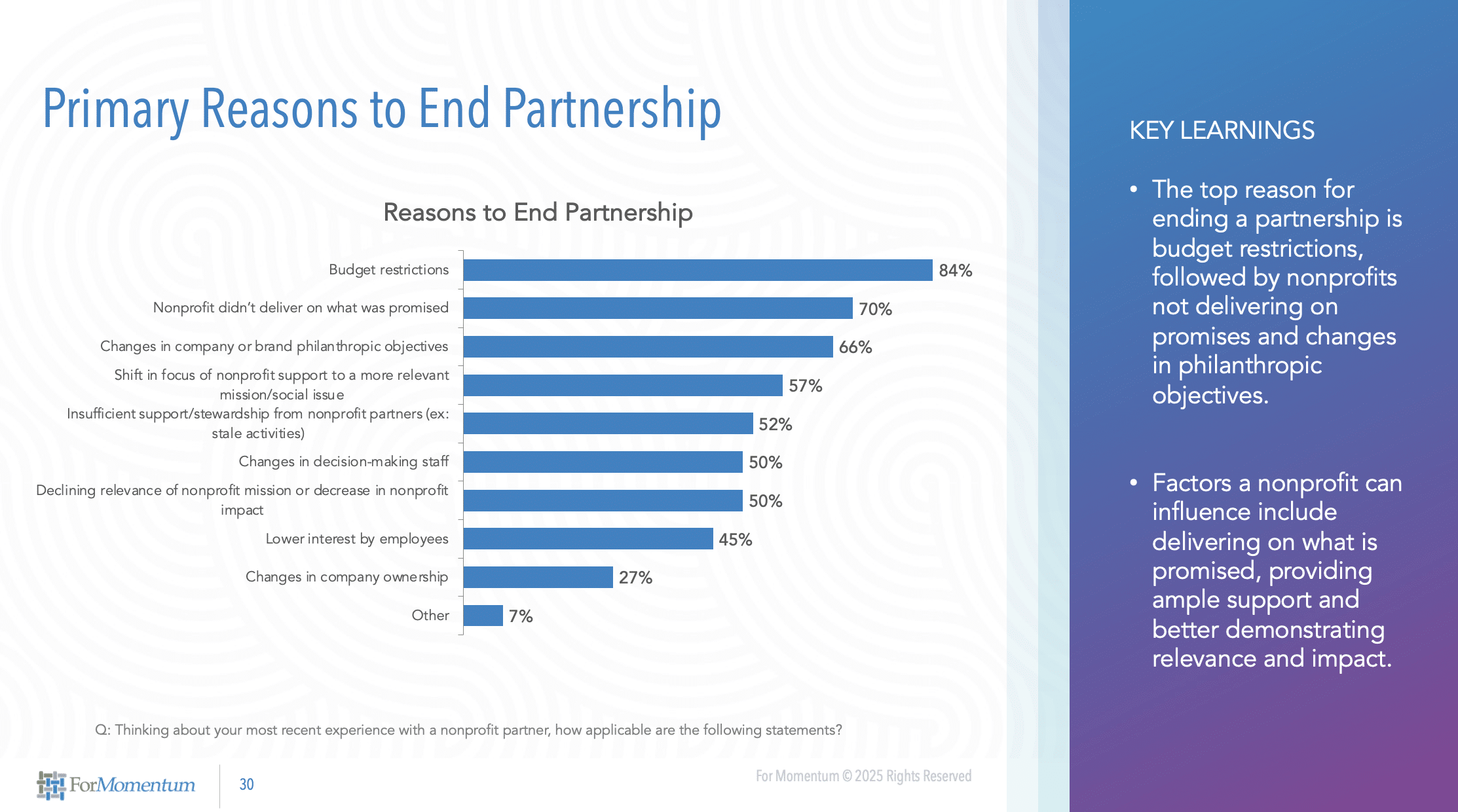
Securing a partnership is only the first step; keeping it is where the real work begins. While some factors are out of your control, you can significantly contribute to a partnership’s longevity by delivering on what you promised and continuously bringing fresh ideas to the table.
According to our research, many nonprofits are receiving “failing grades” from corporate decision-makers when it comes to presenting new and unique opportunities. This is a crucial area for improvement.
Here are three ways to build a long-lasting partnership.
- Understand your corporate partner’s needs: Schedule planning meetings to learn about their goals and how they want to promote the partnership.
- Empower your team: Ensure your staff is trained and equipped to manage the unique needs of each partner.
- Cultivate, steward and recognize: Dedicate time and resources to nurture your existing partnerships. Don’t take them for granted.
Get creative. Use new technology and digital storytelling to create an emotional connection between your partners, their audience and your cause. This helps drive both reputation and sales for your partner. Remember, it’s much more time- and cost-effective to renew an existing partnership than it is to secure a new one. By consistently delivering value and innovating, you can ensure your partnerships thrive.
Preparing for 2026 now will set you up for success. By focusing on impact, strategic alignment and strong stewardship, you can build meaningful, long-term corporate partnerships that benefit everyone involved.
Ready to get started? Contact us today to schedule a year-end planning session.
